
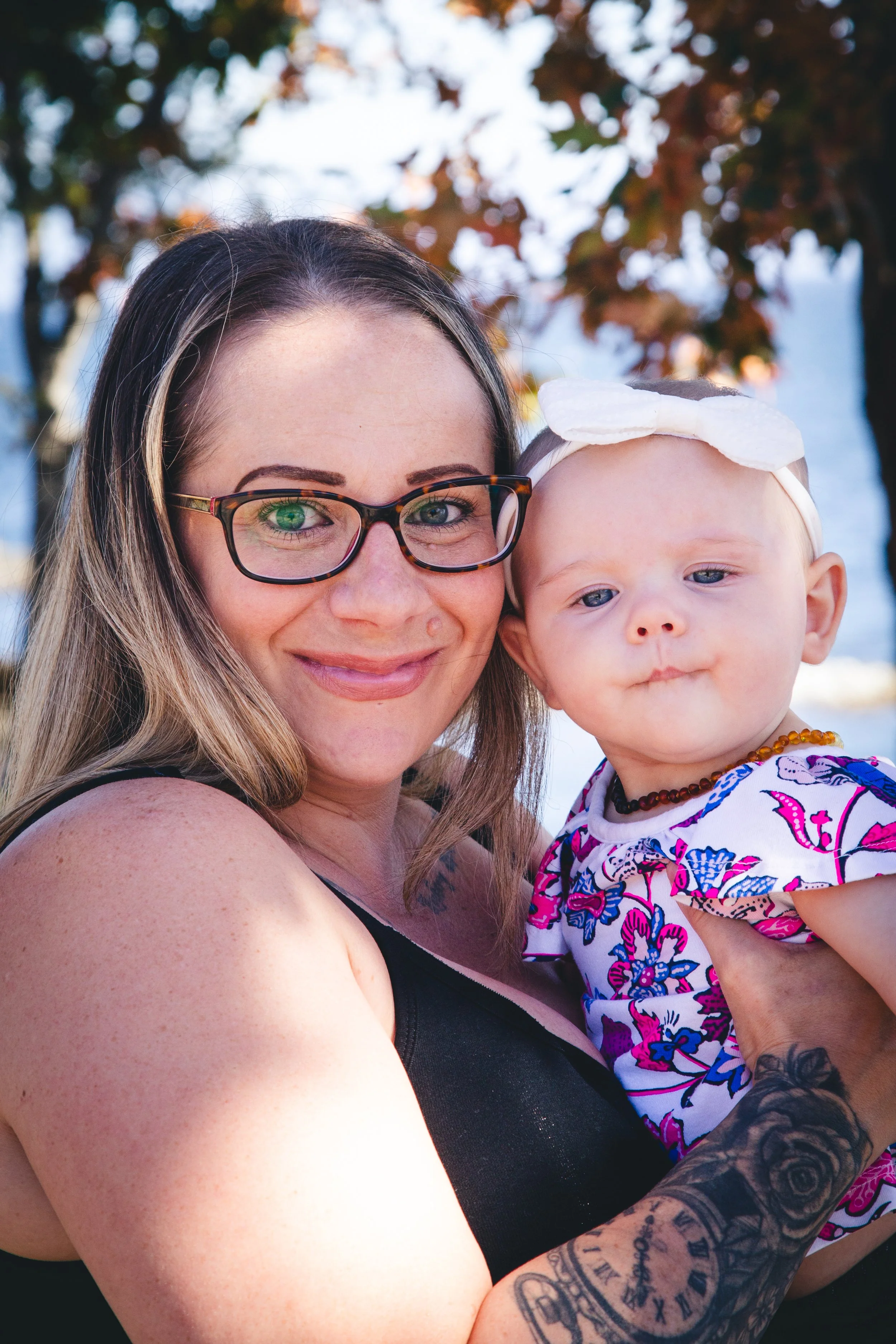
At three o’clock one February morning, Amanda and her husband left Cochrane and drove through a winter blizzard to Canmore. They were going to meet their daughter.
Her pregnancy had been low risk. After moving from Calgary to Cochrane, Amanda had connected with Mountain Maternity on a friend’s recommendation. Other friends encouraged her to deliver in Canmore, describing the hospital’s care in glowing terms.
She was looking forward to a quieter setting for the birth of her second child, with a smaller hospital and a team that would have time for her family.
At 8:37 that morning, Aubree was born.
Shortly afterward, both mother and daughter needed lifesaving care.
A Team Ready to Respond
Amanda suffered a rare, life-threatening postpartum hemorrhage. At the same time, Aubree’s oxygen levels dropped dangerously low. Her newborn daughter needed resuscitation and oxygen treatment while the team worked to stop Amanda’s bleeding.
Outside, the storm had grounded STARS. Amanda was too unstable for immediate transport. The care available in Canmore, in those critical moments, was essential.
As additional blood was rushed from Calgary by police cruiser, the hospital’s team expanded. Healthcare professionals attending an on-site training course joined the doctors, nurses and specialists responding to the emergency.
Amanda remembers people coming straight from the classroom in their everyday clothes and stepping into care without hesitation. Some gathered around Aubree. Others worked beside her.
“They all filed in and jumped in,” she recalls.
The team tried multiple approaches to control the bleeding before an emergency hysterectomy became necessary to save her life. Looking back, Amanda thinks about the knowledge behind those decisions and the preparation each person brought into the room.
“It speaks to the knowledge and the education and the research,” she says of the efforts to stop the hemorrhage.
Someone Stayed Beside Her
Amanda remembers the urgency. She also remembers a feeling she still finds difficult to explain: calm.
“I knew that I was in the greatest hands,” she says.
Charge Nurse Brett Oud stands out in her memory. He came from the training session, took her hand and began organizing the many lines and IVs involved in her care. While managing those details, he continued to comfort her and communicate with the team about how she was doing.
She remembers him noticing when she was awake, when she was feeling something and when she needed reassurance. His attention made a complicated, frightening situation feel more manageable.
“I’ll never forget his face,” she says.
In her written account, Amanda describes someone holding her hand, stroking her hair and explaining what was happening throughout the emergency.
“Even in the middle of a life-threatening emergency, someone made sure I wasn’t alone,” she writes. “That kindness meant more than I can ever put into words.”
That compassion stayed with her as clearly as the medical care.
“I never once felt scared or alone.”
Care for the Whole Family
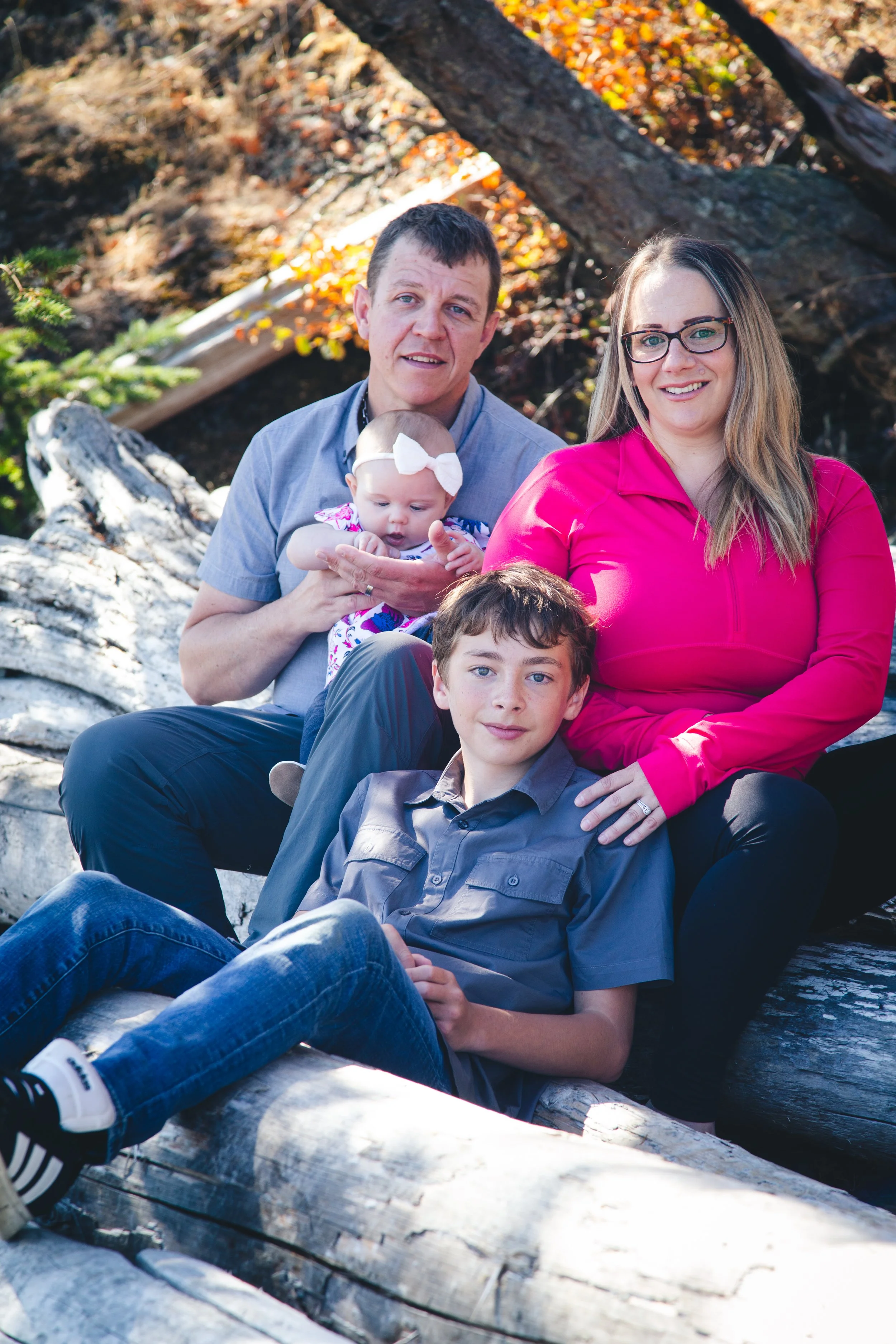
Once Amanda was stabilized, she was transferred to Calgary for critical care. Aubree travelled separately to receive specialized neonatal care. Amanda remembers that one of the physicians accompanied her during the transfer, continuing the care that had begun in Canmore.
The team also looked after her husband, who had watched his wife and newborn daughter face emergencies at the same time.
People brought him food and drinks. They sat with him, comforted him and acknowledged what he had witnessed. Those gestures mattered to Amanda. While the team was working to save two lives, people were also paying attention to the family around them.
Amanda and Aubree were eventually reunited, and their daughter continued to improve under the care of the neonatal team.
Today, Amanda gets to hold Aubree, watch her grow and be home with her family.
“You saved our lives, and you gave our family a future we will never take for granted,” she writes in her thank-you to the care team.
Preparation Begins Long Before an Emergency
For Amanda, the experience brought the importance of healthcare education into sharp focus. She saw the team draw on its knowledge, consider different treatments and work together as the situation changed.
“If they were any less skilled, or any less knowledgeable, or any less educated in what they were doing, I don’t think I would be here today,” she says.
She is grateful that additional healthcare professionals were already in the building for training. But she also believes their willingness to help went well beyond being in the right place at the right time.
“I just got that feeling from every single one of them that they were just so willing to jump in and help,” she says.
Since then, Amanda has returned to the hospital with Aubree and visited team members. Those visits have given her opportunities to thank the people who cared for them and share moments of humour after such a serious experience.
Her appreciation for them is hard to capture in a single story.
Why Support for Local Care Matters
Amanda’s experience illustrates why investing in rural healthcare matters. In a mountain community, weather can prevent air transport, and a patient’s condition can make an immediate transfer impossible. Local teams need equipment, knowledge, and support to respond while arranging further care when needed.
Through donor support, the Canmore Hospital Foundation helps fund equipment and professional education that strengthen care in the Bow Valley. That same hope for families to receive the care they need close to home brings together the Women’s Health Circle, a community of donors committed to closing the women’s health gap in the Bow Valley. It also inspires the Sisterhood Summit, the Foundation’s women’s health gathering, where people come together to share stories, learn from healthcare experts, and raise funds for local care. Both are rooted in a shared commitment to helping more women and families build a future together, like Amanda and Aubree.
For Amanda, those investments mean something deeply personal.
“Our experience also showed me that lifesaving care doesn’t begin when an emergency happens,” she writes. “It begins long before that moment, through education, practice, training, preparation, and access to the right medical equipment and technology.”
Her gratitude belongs to the people who cared for her family, and her story is an invitation to help ensure local teams continue to have the resources they need.
“Behind every piece of equipment, every training session, and every dollar raised, there is a family hoping for the chance to bring their loved ones home,” she writes.
“I know, because that family was mine.”
You too can help strengthen care for women and families in the Bow Valley. Make a gift today in support of women’s health. In doing so, you’ll become part of the Women’s Health Circle and join a community dedicated to closing the gap on women's health.